
Introduction
The robotics industry is experiencing unprecedented growth, with the global market projected to reach $218 billion by 2030. Whether you’re selling industrial automation systems, service robots, educational robotics kits, or consumer-focused robotic products, success requires a strategic approach that combines technical knowledge, customer understanding, and effective sales techniques.
This comprehensive guide from Roboshy will walk you through proven strategies to excel in the competitive robotics marketplace. Visit www.roboshy.com for more resources and insights.
Step 1: Understand Your Target Market
Identify Your Ideal Customer
Before selling any robotic solution, you must deeply understand who will benefit most from your products. Different sectors have distinct needs:
- Manufacturing and Industrial: Companies seeking automation to improve efficiency, reduce labor costs, and enhance precision
- Healthcare: Hospitals and clinics requiring surgical robots, rehabilitation devices, or automated dispensing systems
- Logistics and Warehousing: E-commerce and distribution centers needing autonomous mobile robots and sorting systems
- Education: Schools and training centers looking for STEM learning tools and programmable robots
- Consumer Market: Individuals interested in home cleaning robots, lawn care, or entertainment robotics
Research Market Pain Points
Conduct thorough research to identify specific challenges your target customers face. Common pain points include:
- Labor shortages and rising workforce costs
- Safety concerns in hazardous environments
- Need for 24/7 operations without human fatigue
- Quality consistency and error reduction
- Scalability challenges during peak demand periods
Step 2: Build Product Expertise
Master Technical Specifications
To successfully sell robots, you must become a technical expert on your products. This includes understanding payload capacity, reach and workspace dimensions, speed and accuracy specifications, programming interfaces, safety features and certifications, integration capabilities with existing systems, and maintenance requirements and lifecycle costs.
Demonstrate ROI Capabilities
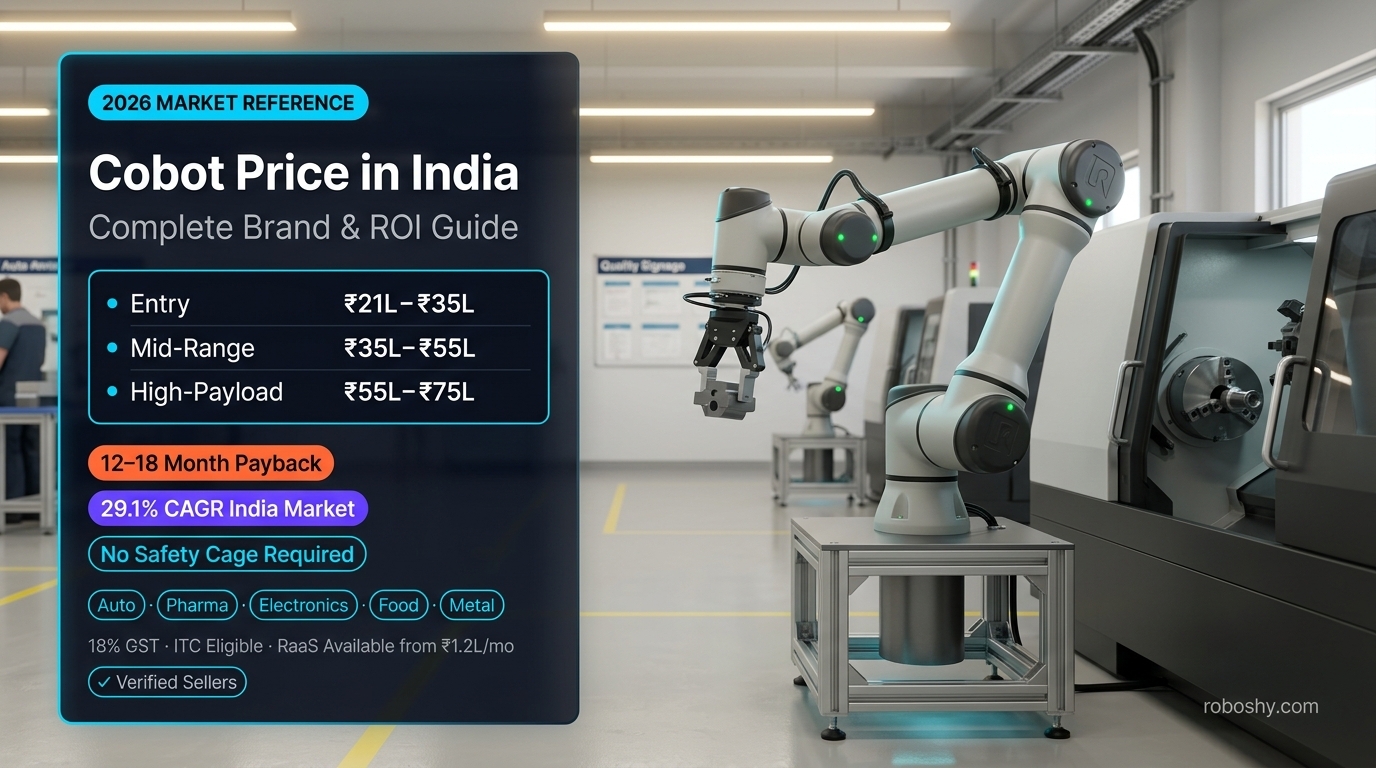
Customers need to see clear financial benefits. Prepare detailed ROI calculations that show productivity gains through faster cycle times, labor cost reductions with specific payback periods, quality improvements and defect rate reduction, energy efficiency compared to traditional methods, and total cost of ownership over 3-5 years.
Roboshy provides comprehensive Robots varities at https://roboshy.com/trends-insights/ to help you make compelling business cases.
Step 3: Develop a Multi-Channel Sales Strategy
Direct Sales Approach
For high-value industrial robots, direct sales remain the most effective method. Build a specialized sales team with technical backgrounds, develop a consultative selling process focused on solutions, create customized demonstrations and proof-of-concept trials, and establish relationships with key decision-makers in target organizations.
Digital Marketing and E-Commerce
For consumer and education markets, leverage digital channels:
- Optimize your website for robotic product searches with detailed specifications and videos
- Utilize Amazon, specialized robotics marketplaces, and your own e-commerce platform
- Create educational content including tutorials, comparison guides, and application case studies
- Engage on social media platforms with demonstrations and customer success stories
Partner Networks and Distribution
Establish partnerships with system integrators who can customise solutions for specific industries, value-added resellers who provide local support and training, and industry consultants who recommend robotics solutions to their clients.
Step 4: Perfect Your Sales Presentation
Create Compelling Demonstrations
Nothing sells robots better than seeing them in action. Your demonstrations should:
- Simulate real-world applications relevant to the customer’s industry
- Highlight ease of programming and operation
- Show safety features and compliance with industry standards
- Demonstrate flexibility and adaptability to different tasks
- Include interactive elements where prospects can control or program the robot
Address Common Objections
Prepare responses to frequent concerns about high upfront costs (emphasize ROI and financing options), job displacement fears (position as workforce augmentation, not replacement), technical complexity (showcase user-friendly interfaces and training programmers), integration challenges (demonstrate compatibility and support services), and maintenance requirements (explain service agreements and remote diagnostics capabilities).
Step 5: Provide Exceptional Post-Sale Support
Implementation and Training
Success doesn’t end at the sale. Offer comprehensive installation and commissioning services, hands-on training programmers for operators and maintenance staff, documentation in multiple formats (video, written guides, interactive tutorials), and ongoing technical support through multiple channels.
Build Long-Term Relationships
Turn customers into advocates by:
- Conducting regular check-ins to ensure optimal performance
- Providing software updates and enhancement options
- Offering preventive maintenance programs
- Creating user communities for knowledge sharing
- Requesting testimonials and case study participation
Step 6: Leverage Data and Analytics
Modern robotics sales require a data-driven approach. Track key metrics including lead conversion rates by industry and application, average sales cycle length, customer acquisition cost, lifetime customer value, product performance and reliability data, and customer satisfaction scores.
Use this data to refine your sales strategy, identify the most profitable market segments, optimize pricing and positioning, and improve product development based on customer feedback.
Step 7: Stay Ahead of Industry Trends
The robotics industry evolves rapidly. Maintain your competitive edge by:
- Attending major robotics trade shows and conferences (Automate, ICRA, RoboBusiness)
- Following industry publications and thought leaders
- Joining professional organizations like the Robotics Industries Association (RIA)
- Monitoring emerging technologies (AI integration, collaborative robots, autonomous systems)
- Understanding regulatory changes affecting robotics deployment
Visit Trends and Insights for the latest industry trends and analysis.
Key Success Factors at a Glance
The following table summarizes critical success factors for selling robots effectively:
Success Factor | Implementation Strategy |
| Technical Knowledge | Deep understanding of product specifications, capabilities, and applications |
| Customer Focus | Consultative approach addressing specific pain points and business objectives |
| ROI Demonstration | Clear financial justification with payback period and long-term value |
| Hands-On Demos | Interactive demonstrations simulating real-world applications |
| Support Services | Comprehensive training, maintenance, and ongoing technical assistance |
| Relationship Building | Long-term engagement turning customers into advocates and repeat buyers |
Official Vendor Onboarding & Product Management Manual
A Comprehensive Guide for Roboshy Marketplace Partners
Phase 1: Vendor Registration
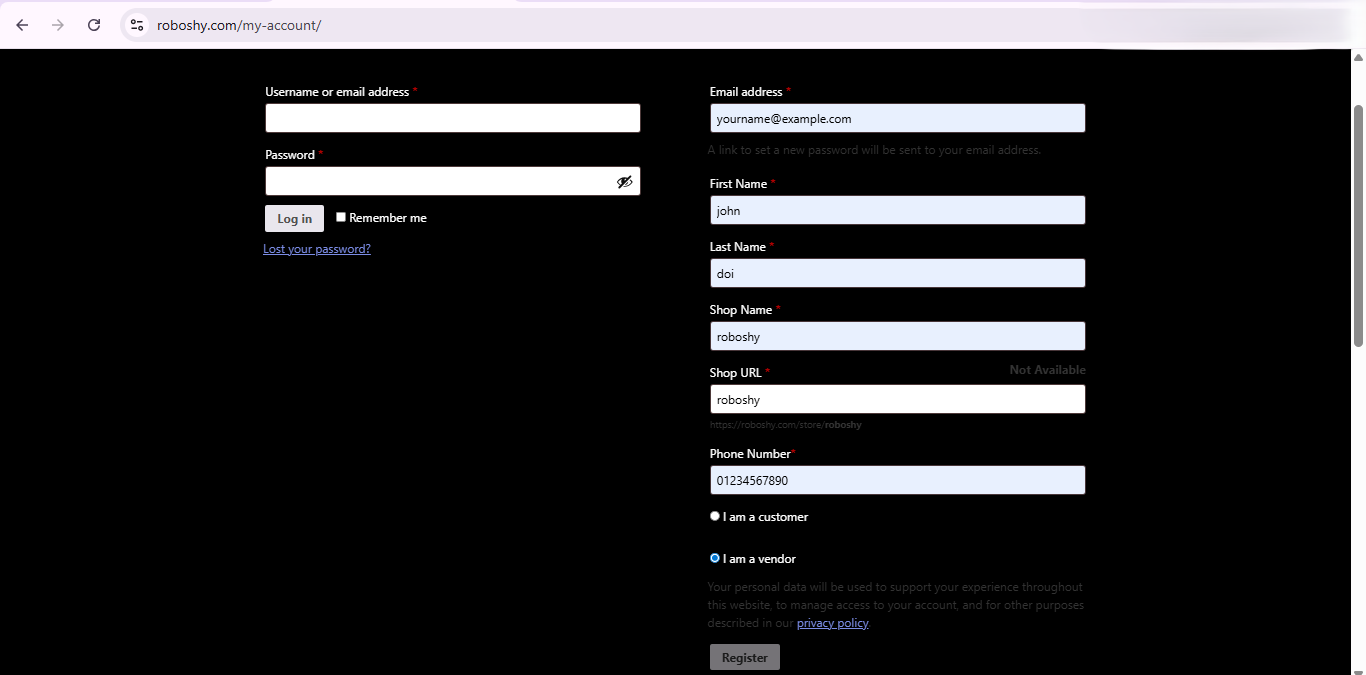
Sign up at Roboshy. Select “I am a vendor” to enable store features. Fill in your shop name and phone number.
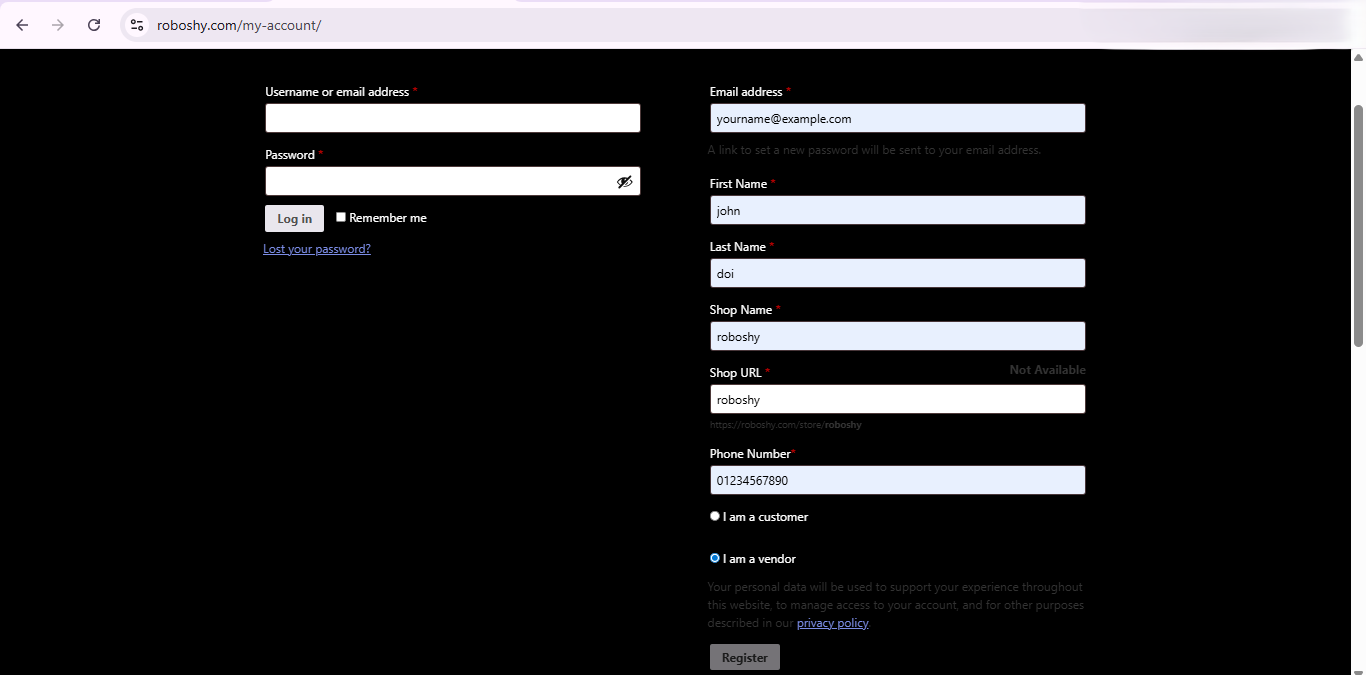
Step 1: Create your account at Roboshy. Select “I am a vendor”. Enter your Shop Name and Phone Number. (Ref: Screenshot 1)
1. Go to the registration page.
2. Enter your email and password.
3. SELECT ‘I am a vendor’.
4. Enter your Shop Name and Phone Number.
5. Click ‘Register’.
Phase 2: Store Setup Wizard
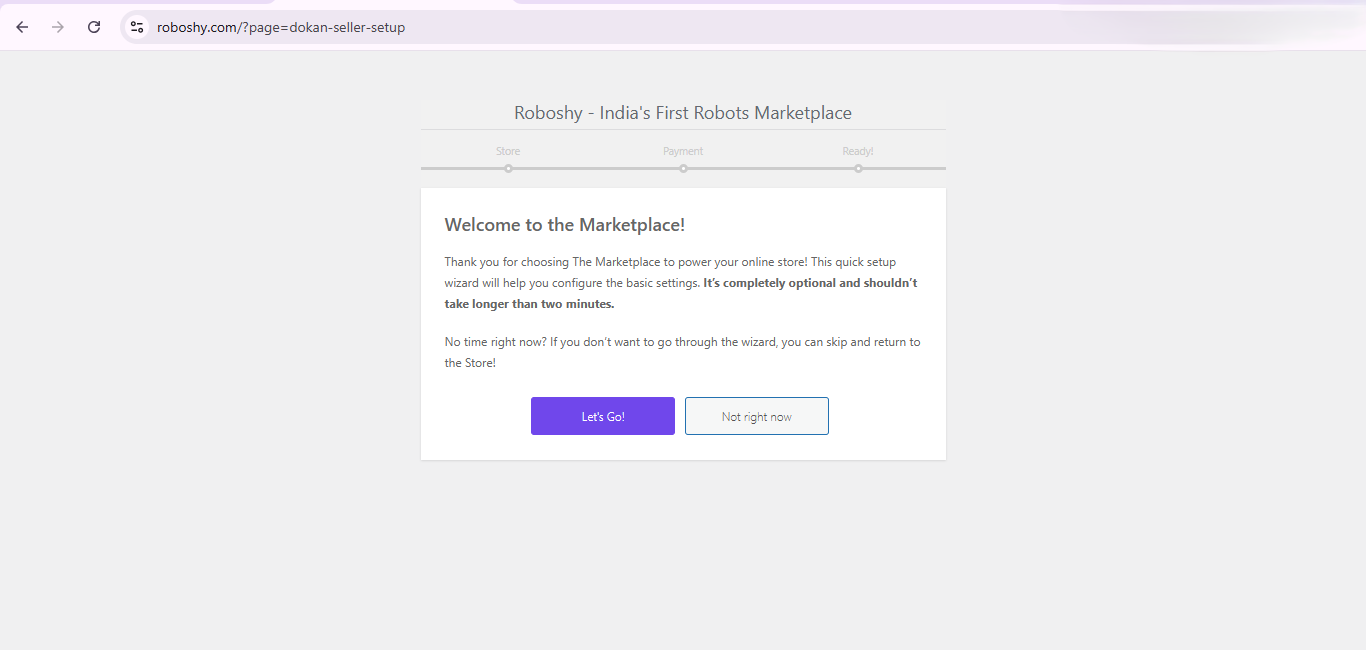
Click ‘Let’s Go!’ to start the configuration wizard.
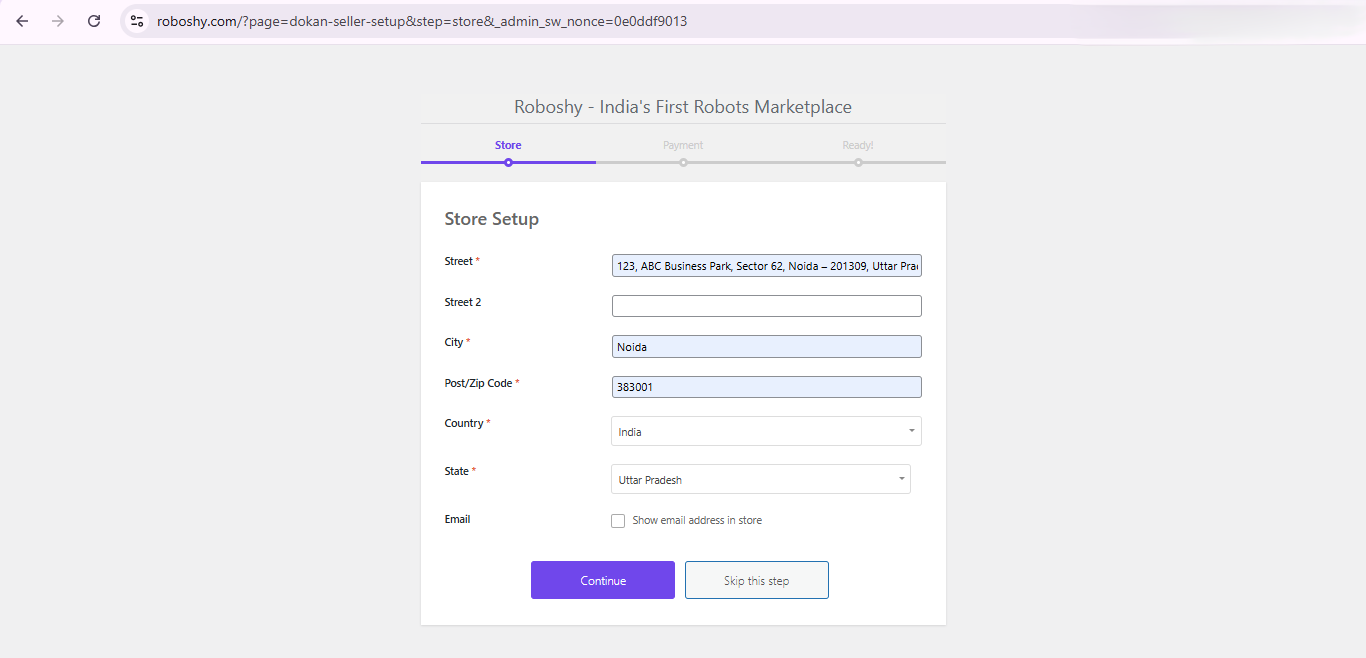
Enter your business address, city, and zip code
Enter your PayPal email address for receiving payments.
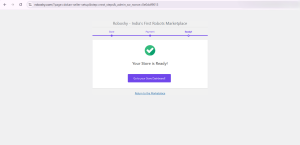
Setup complete! Click ‘Go to your Store Dashboard’.
Step 2: Click “Let’s Go!” to start. (Ref: Screenshot 2) Step 3: Enter your business address and location details. (Ref: Screenshot 3) Step 4: Enter your PayPal Email for automated payouts. (Ref: Screenshot 4) Step 5: Finalize the wizard to enter your Dashboard. (Ref: Screenshot 5)
Phase 3: Product Listing
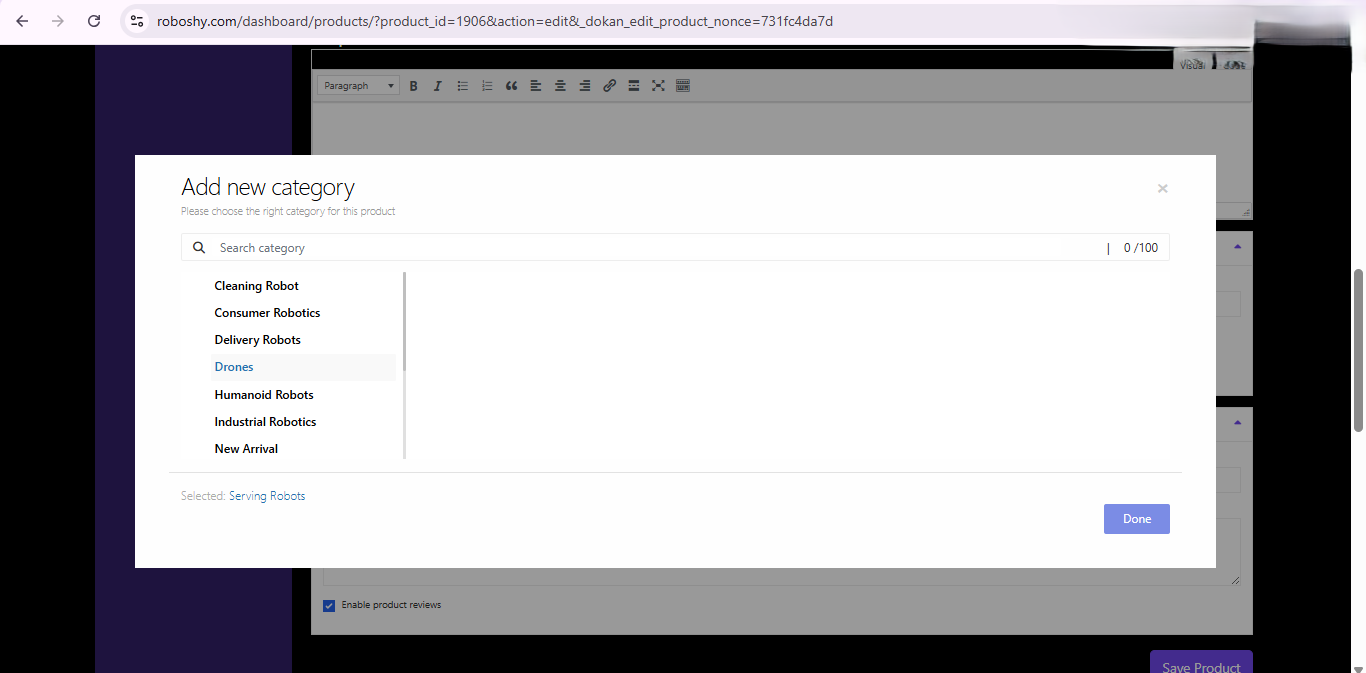
Navigate to ‘Products’ in the sidebar and click ‘Add New Product’.
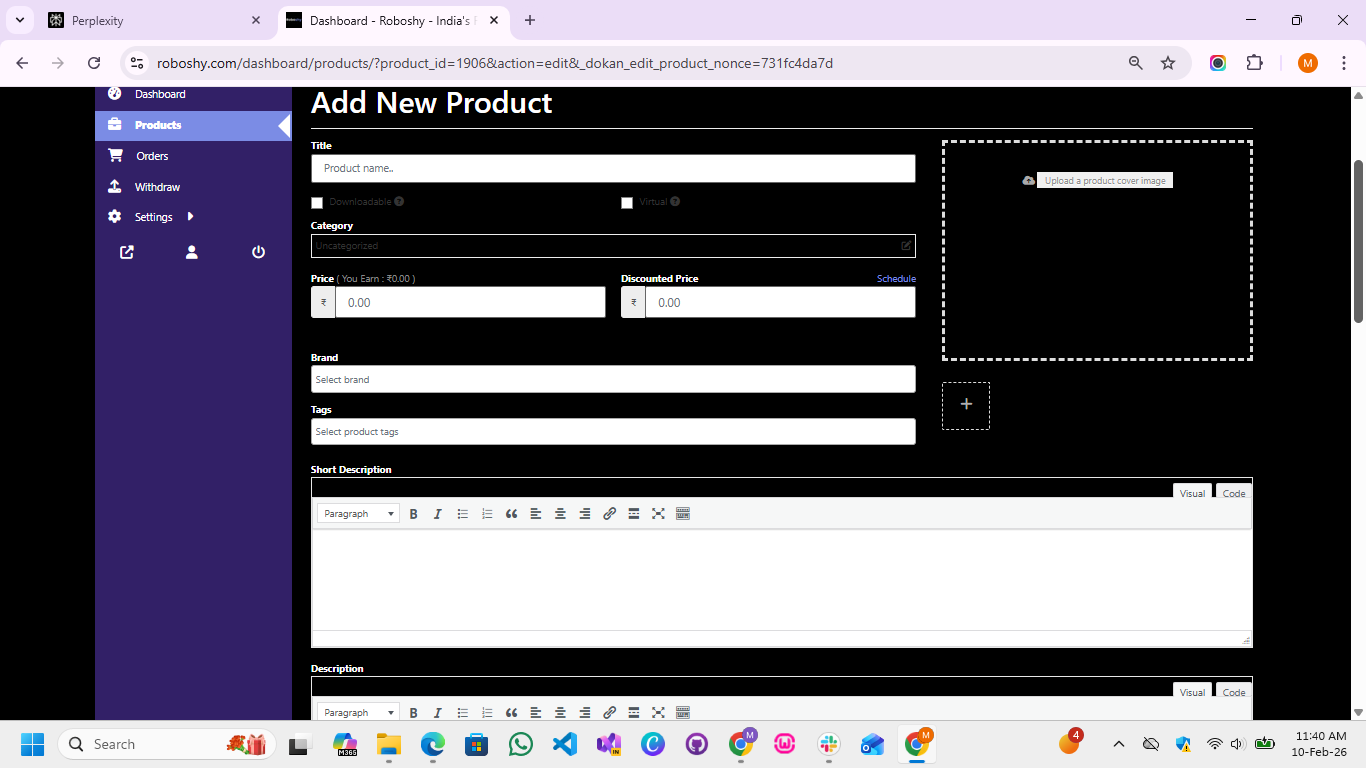
Select the correct category for your robot (e.g., Humanoid, Drone).
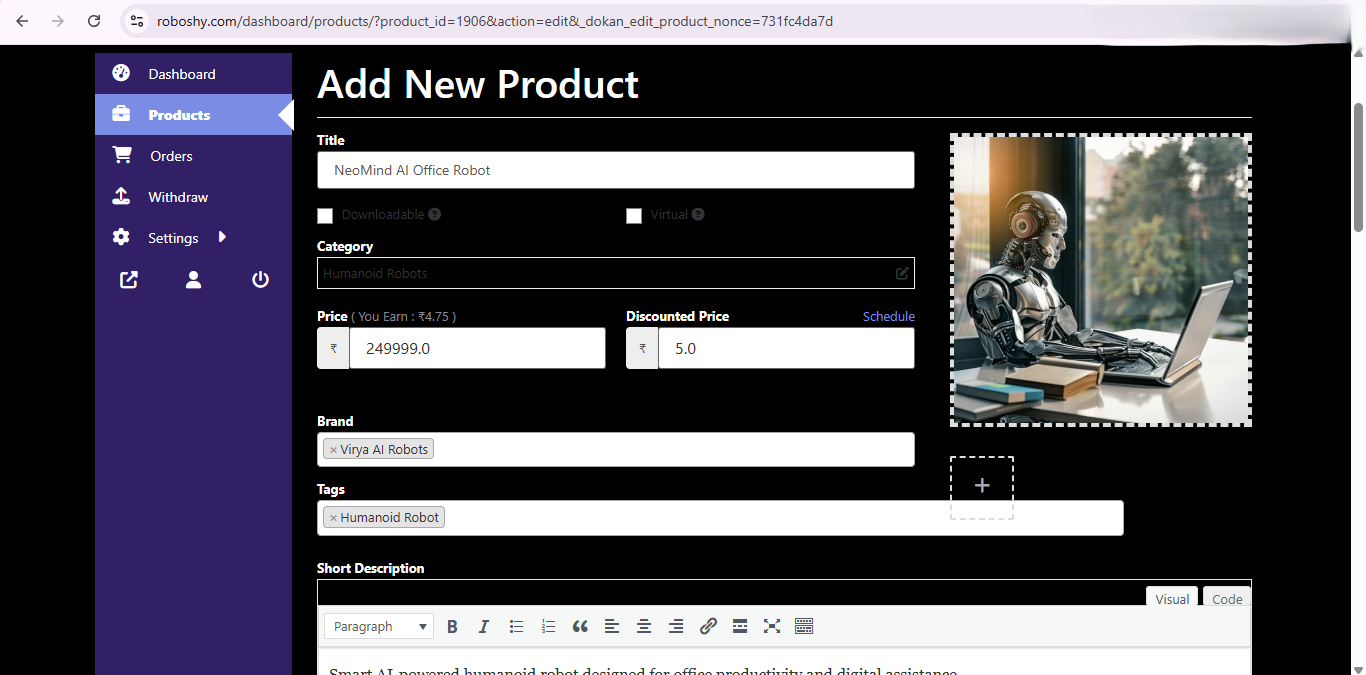
1. Enter Product Title (Name).
2. Set Regular and Sale Price.
3. Upload a high-quality cover image.
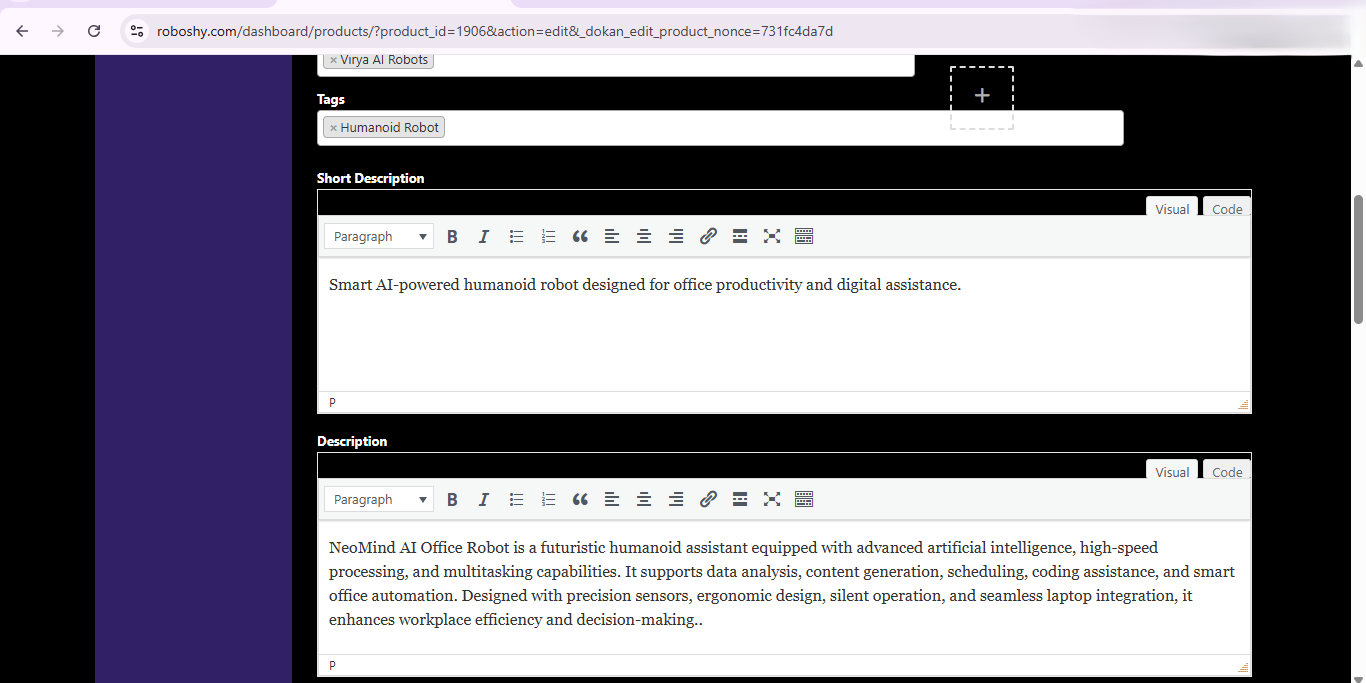
Step 6: Go to Products > Add New Product. (Ref: Screenshot 6) Step 7: Select your robot category (e.g., Humanoid, Drone). (Ref: Screenshot 7) Step 8: Add Title, Price, and high-quality images. (Ref: Screenshot 8) Step 9: Add Short/Long descriptions and technical tags. (Ref: Screenshot 9) Step 10: Click “Save Product”. You will see a green success message. (Ref: Screenshot 10)
Add a Short Description (summary) and a Detailed Description (specs).
Phase 4: Success
Click ‘Save Product’. A green banner will confirm the product is successfully saved.
Official Customer Experience Manual
A Comprehensive Guide for Roboshy Marketplace Shoppers
Phase 1: Account Setup & Security
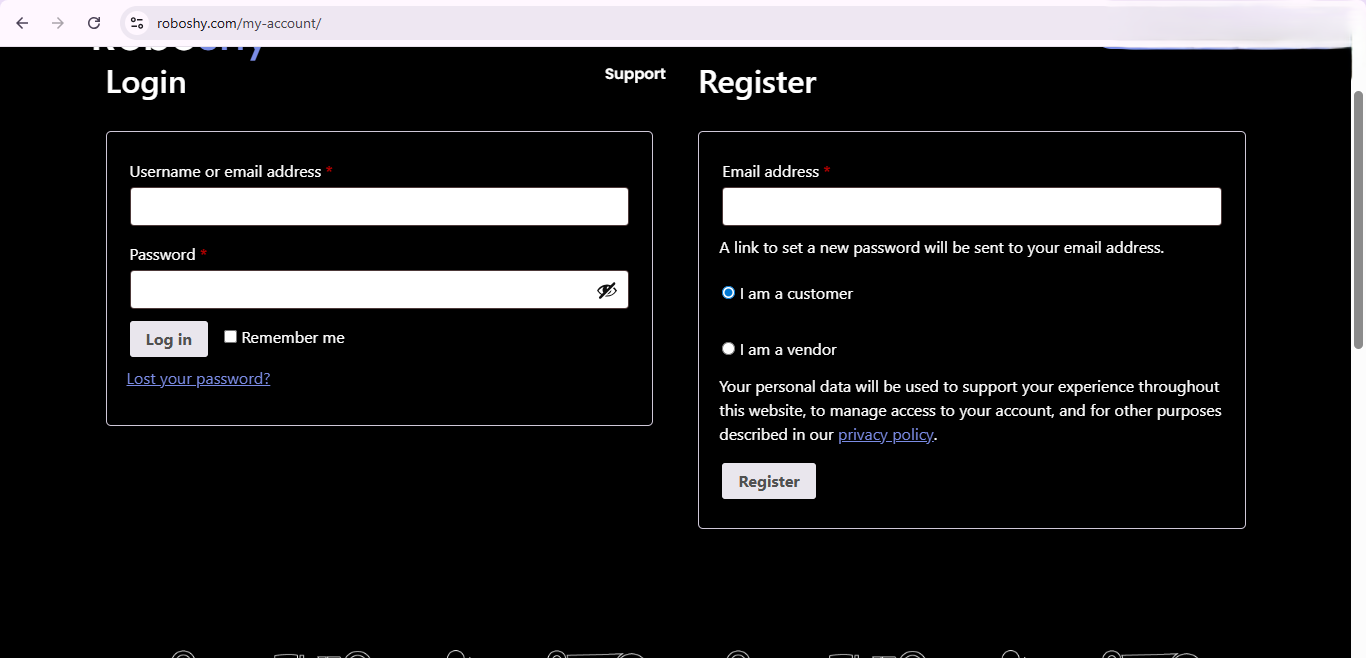
1. Navigate to ‘My Account’.
2. Enter your email address in the Register section.
3. Select ‘I am a customer’.
4. Click ‘Register’. Check your email for the password setup link.
Instructions: Visit the ‘My Account’ page. Under the Register section, enter your email and select “I am a customer”. Click Register. You will receive an email to set your password.
Step 2: Profile & Password Security
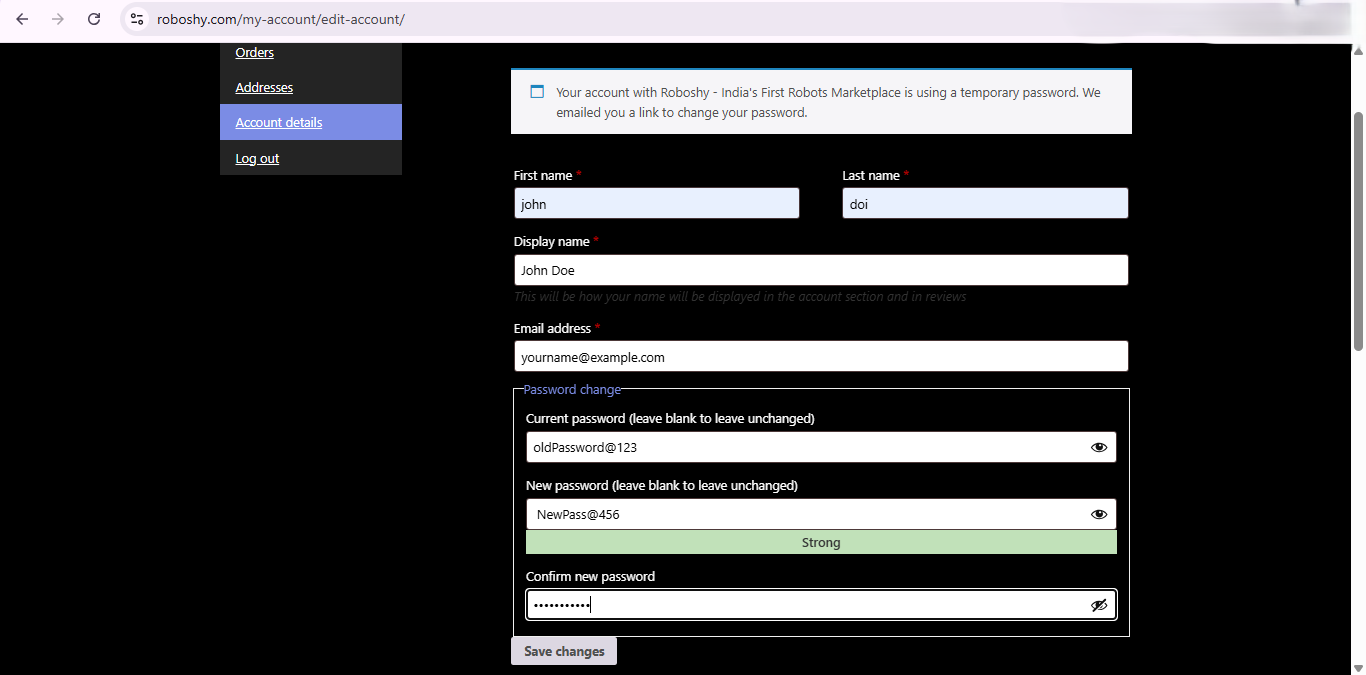
1. Go to ‘Account Details’ to personalize your profile.
2. Set your Display Name.
3. Update to a ‘Strong’ password as shown by the security indicator.
Instructions: In your dashboard, go to Account Details. Enter your first and last name for billing. Use the password section to create a Strong password to protect your order history.
Phase 2: Address Management
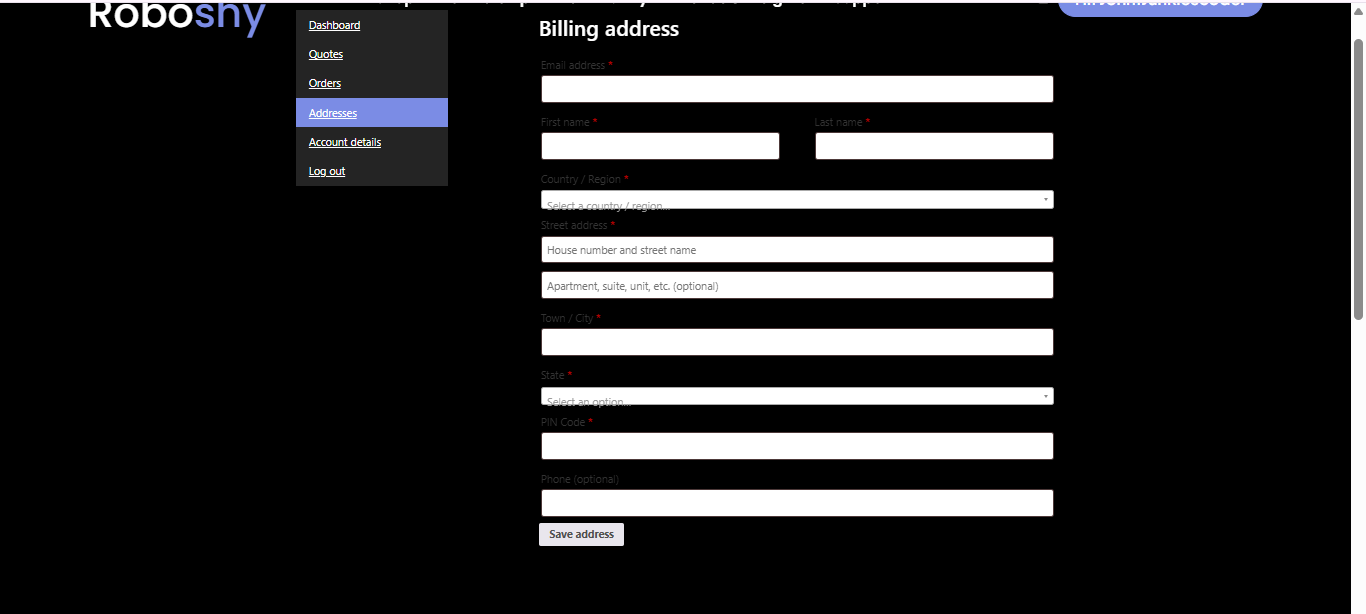
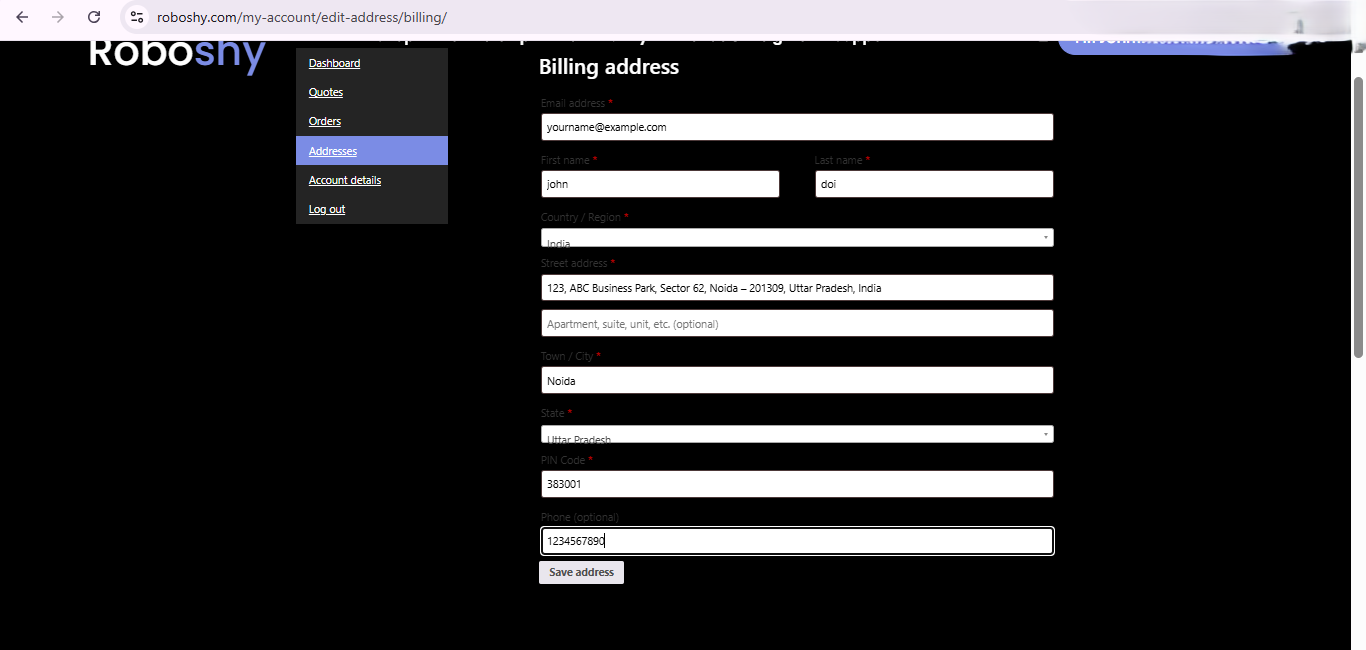
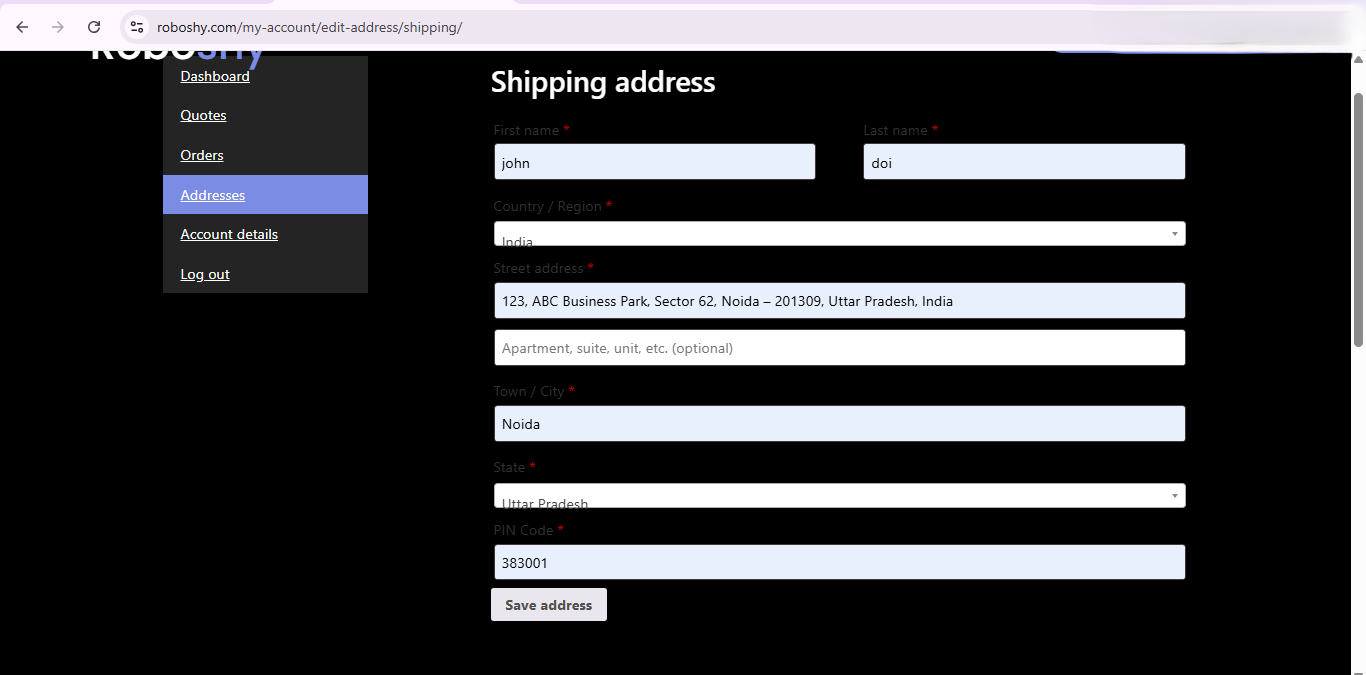
1. Navigate to the ‘Addresses’ tab in your dashboard.
2. Fill in your Billing and Shipping addresses separately.
3. Ensure PIN Code and Contact Number are accurate for delivery
Instructions: Go to the Addresses tab. You must provide a valid Shipping Address. Include your Street, City, State, and PIN Code. Accurate phone numbers are required for shipping updates.
Phase 3: Product Inquiry & Quotes
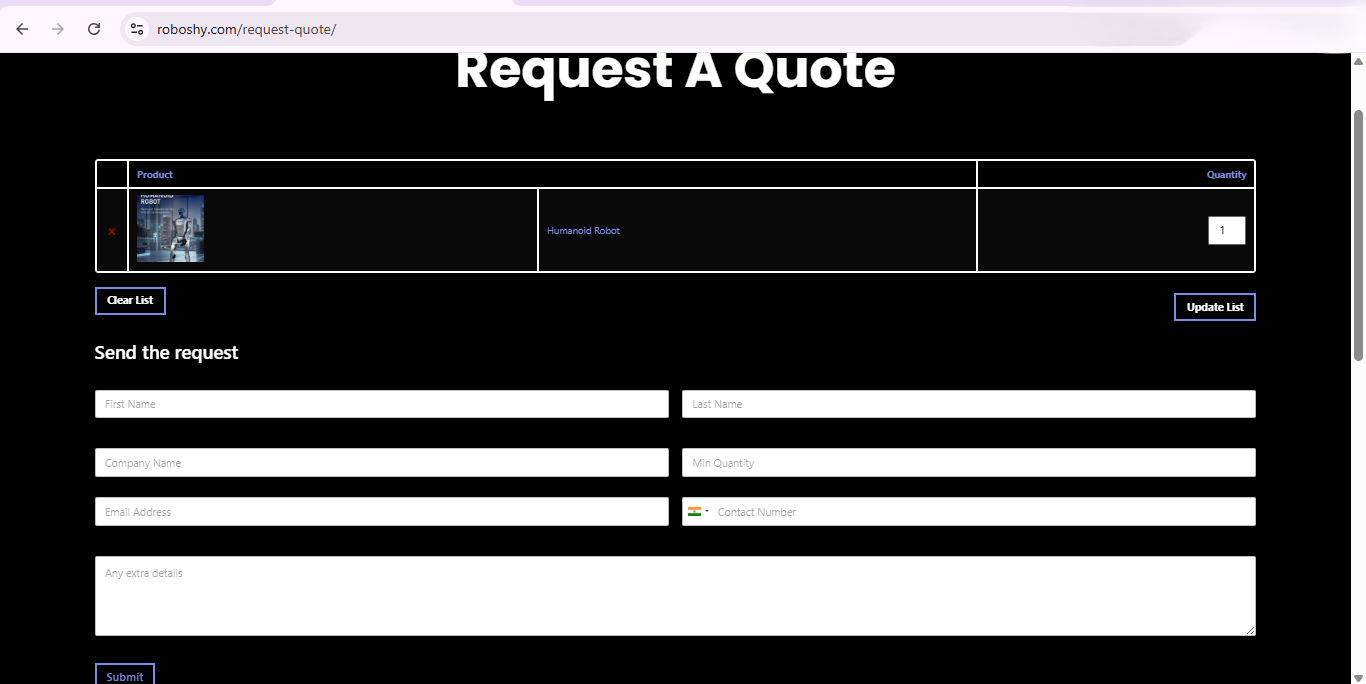
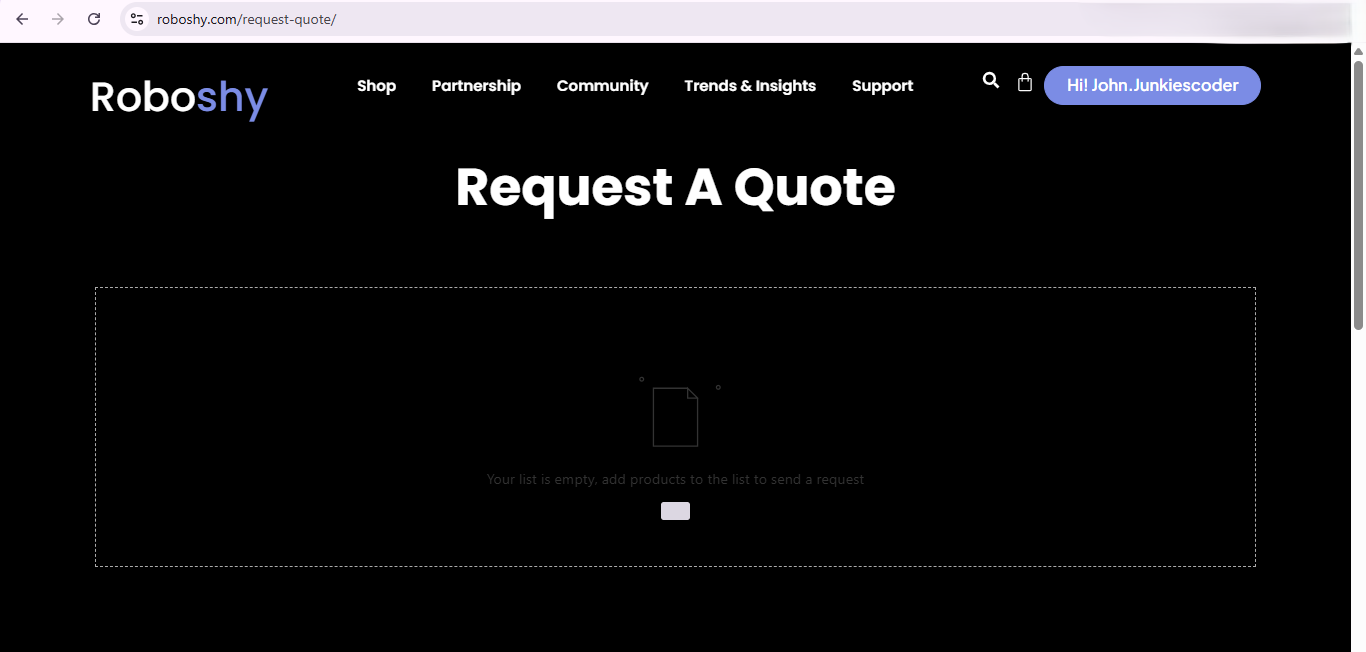
1. Browse robots and add them to your Quote list.
2. Open the ‘Request A Quote’ page to view your selected items.
3. Adjust the ‘Quantity’ for each robot as per your requirement.
Instructions: For high-end robotics, use the Request a Quote feature. Browse the marketplace and add items to your list. You can update the Quantity for each robot directly in the quote table.
Step 5: Submitting Technical Requirements
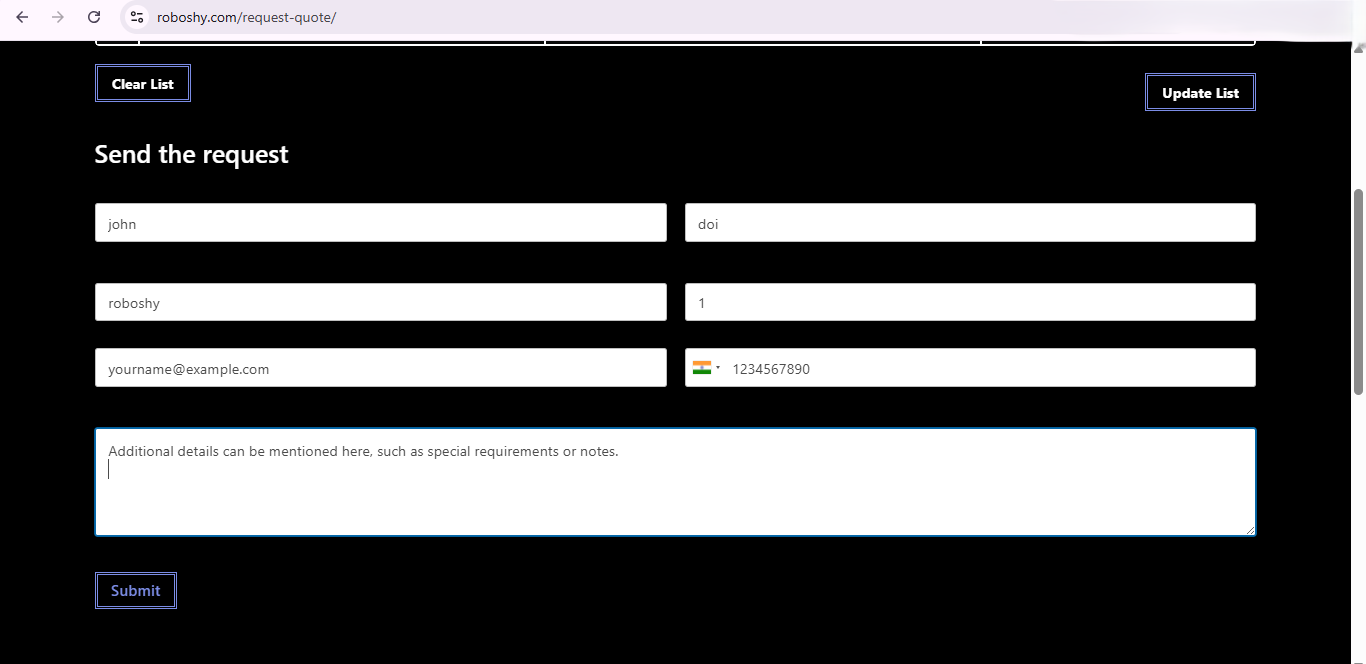
1. Scroll to the ‘Send the request’ form.
2. Fill in your Name, Company, and Email.
3. Use the ‘Additional details’ box for custom software or hardware specs.
4. Click ‘Submit’ to notify the vendor.
Instructions: Fill out the contact form below the quote list. Use the “Additional details” box to specify if you need custom programming, extra battery modules, or specific AI training for the robot. Click Submit.
Conclusion – Final Words
Successfully selling robots requires a combination of technical expertise, customer empathy, strategic marketing, and unwavering commitment to post-sale support. As automation continues to transform industries worldwide, the opportunities for robotics professionals are immense.
By following this step-by-step guide, you’ll be well-positioned to navigate the competitive robotics marketplace, build lasting customer relationships, and drive significant business growth. Remember that selling robots is not just about moving products; it’s about enabling transformation and helping organisations achieve their strategic goals through automation.
For additional resources, training materials, and expert consultation, visit www.roboshy.com or contact our team for personalised guidance on your robotics sales journey.
Frequently Asked Questions (FAQs)
Q1: What factors matter most when buying robots?
Customers look for strong ROI, easy system integration, reliability, safety certifications, training support, and long-term service availability.
Q2: How long does an industrial robot sales cycle take?
Typically 3–12 months. Cobots close faster (3–4 months), while complex automation projects take longer.
Q3: What financing options should be offered?
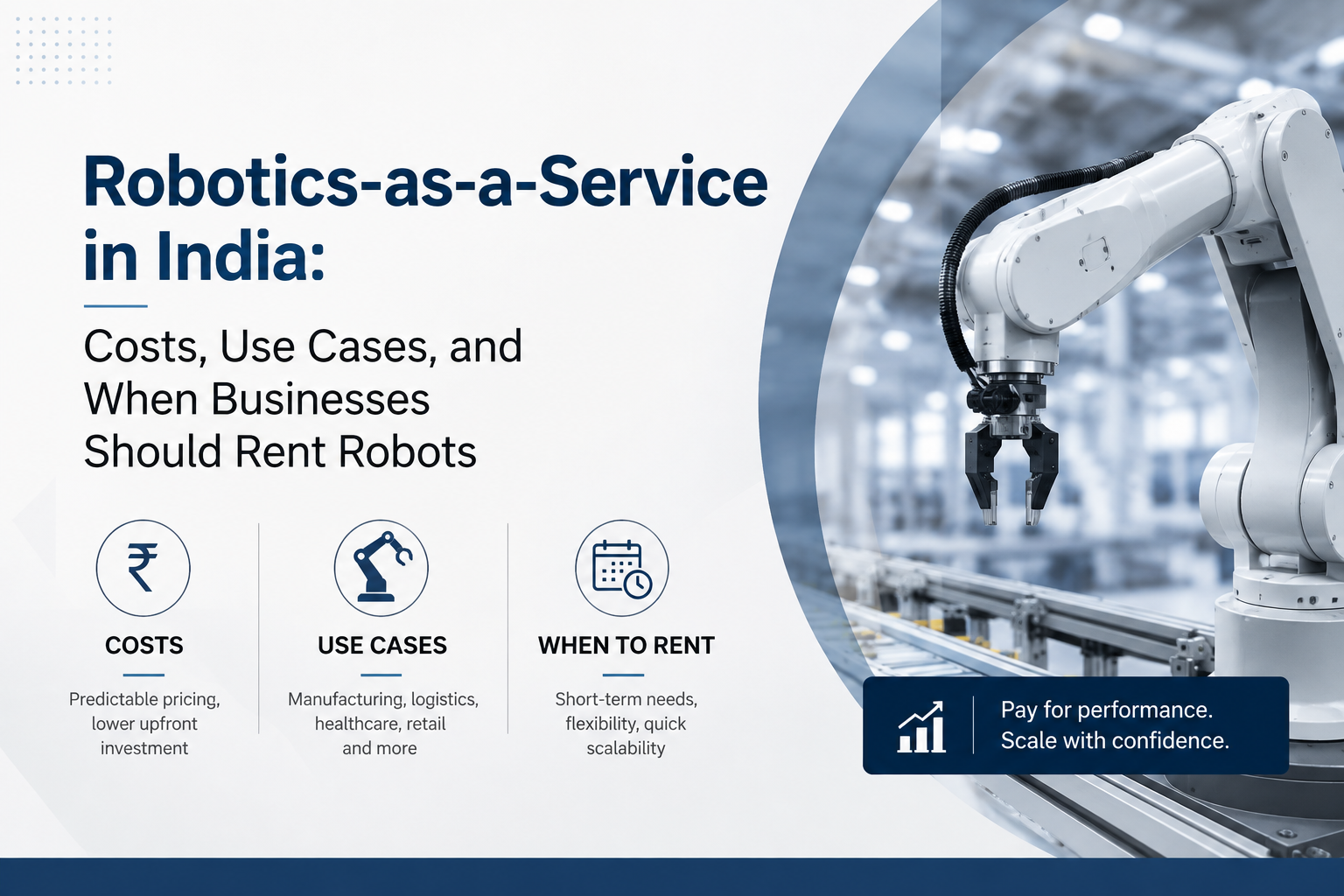
Leasing, equipment financing, Robotics-as-a-Service (RaaS), and flexible payment plans help close deals faster.
Q4: How to compete with lower-priced robots?
Highlight total cost of ownership, reliability, energy efficiency, support quality, and long-term value instead of upfront price.
Q5: What certifications help robotics sales professionals?
RIA certifications, manufacturer training, sales methodologies, and strong automation or engineering knowledge add credibility.
Q6: Are demos important in robot sales?
Yes. Live demos significantly increase conversions by showing real-world performance and ease of use.
Q7: Common mistakes in selling robots?
Overselling features, ignoring business outcomes, weak post-sale support, and poor integration planning.
Q8: How to address job replacement concerns?
Position robots as tools that support workers, improve safety, and create new technical roles.
Q9: Why is content marketing important in robotics sales?
It builds trust through case studies, demos, ROI tools, blogs, and educational resources.
Q10: How to measure robotics sales performance?
Track conversion rates, deal size, sales cycle length, customer acquisition cost, win rate, and customer satisfaction.
Ready to Take Your Robot Sales to the Next Level?
Visit www.roboshy.com for exclusive resources, training programmes, and expert support.