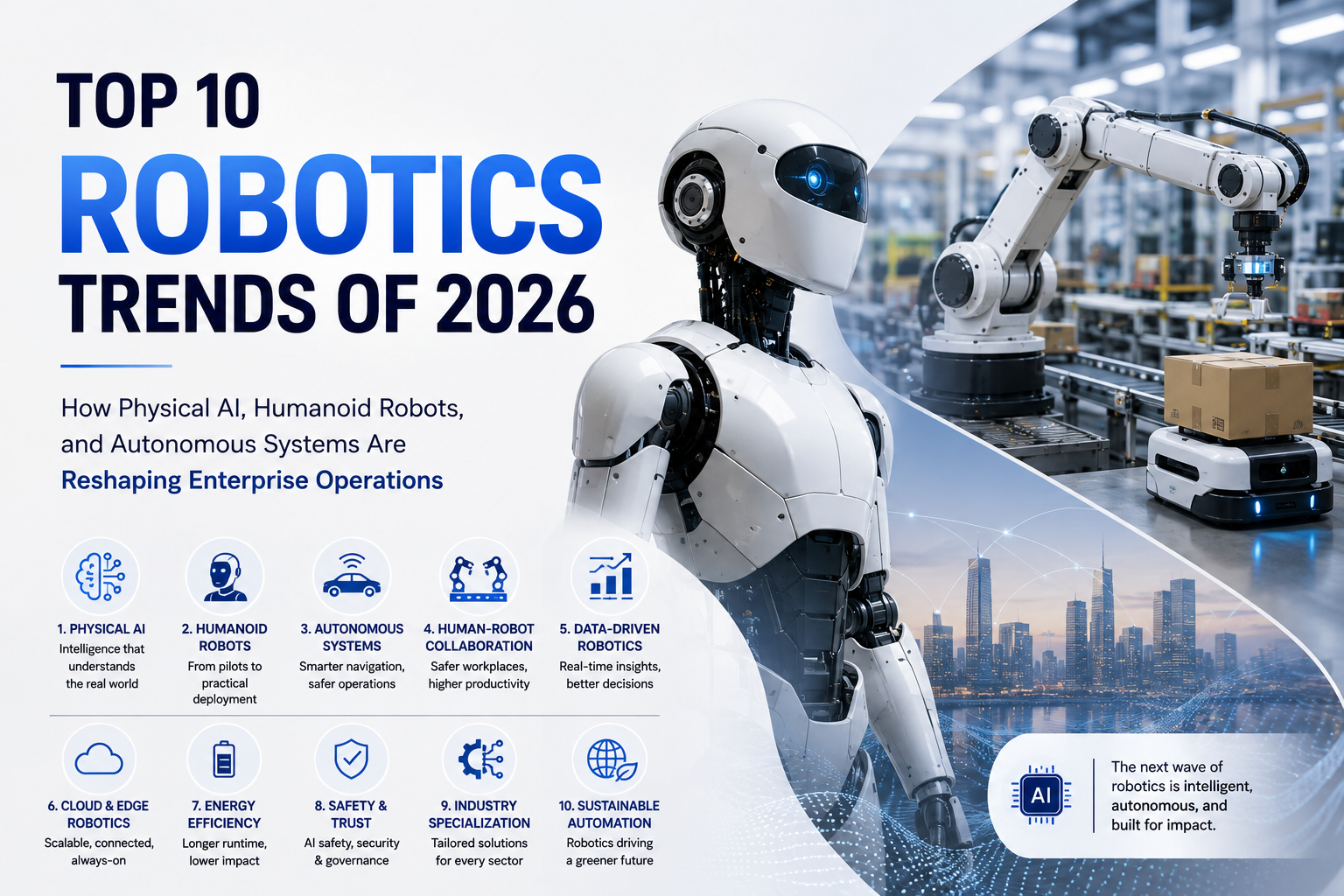
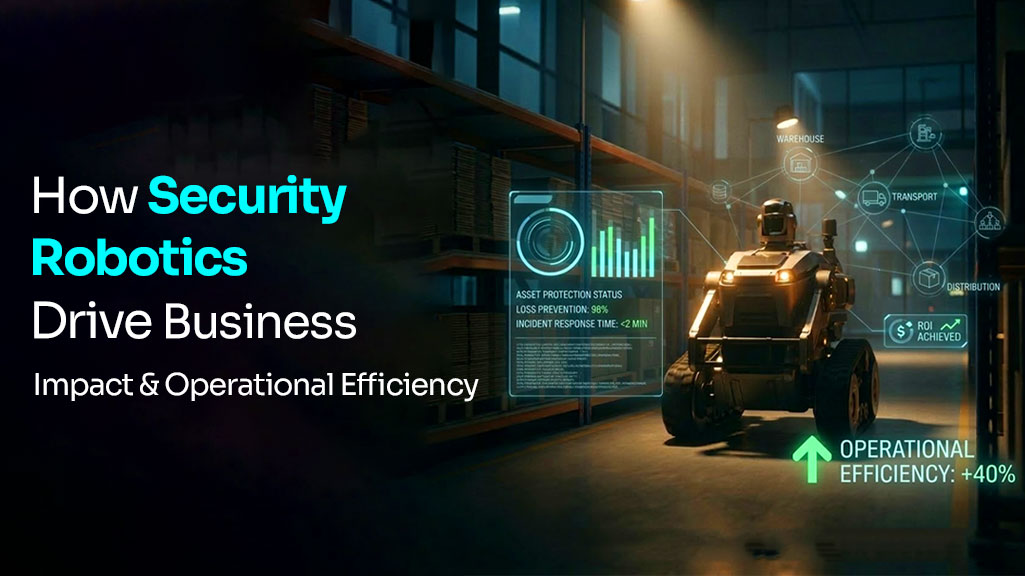
How Security Robotics Drive Business Impact and Operational Efficiency
Executive Summary
The security robotics market is on track to hit $18.87 billion in 2026 and grow to $65.8 billion by 2034 at a 16.9% annual growth rate. Companies using Roboshy-powered autonomous patrol systems are already seeing real results. They are cutting operational costs by 40%, reducing theft by 50%, and getting their full investment back within 12 to 18 months. This is not just a small improvement. It is a real shift in how businesses protect their assets, manage their security teams, and deal with threats on the ground.
This report synthesises intelligence from 20+ enterprise deployments, including case studies from GXO Logistics, Genpact data centres, Boston Dynamics’ scaled robotics programmes, and Roboshy-integrated warehouse networks. Every metric cited reflects verified deployment outcomes, not vendor projections.
Businesses that wait too long will not just miss out on savings. They will fall behind competitors who already have autonomous patrol coverage, AI-powered threat detection, and GenAI-based monitoring running around the clock. These tools are quickly becoming the standard in enterprise security.
1. Global Market Dynamics and Growth Projections
The security robotics sector is among the fastest-growing segments within enterprise automation. Urbanisation, labour shortages, and the proliferation of high-value assets across warehouse, logistics, and data infrastructure verticals are driving demand at scale. Roboshy’s market intelligence unit identifies three primary growth engines: GenAI integration, edge computing deployment, and BVLOS (Beyond Visual Line of Sight) drone expansion.
North America holds 35% of the global market and continues to set the standard through early enterprise deployments. Asia-Pacific is growing the fastest at 18.5% annually, powered by manufacturing security upgrades across China, South Korea, and Japan. European businesses are also moving fast, building GDPR-friendly autonomous patrol systems that meet strict data privacy rules.
1.1 Market Segmentation and Size by 2026
The table below maps the security robotics market by segment, reflecting Roboshy’s platform positioning across each vertical:
| Segment | 2026 Size ($B) | CAGR to 2034 | Key Driver |
| Commercial / Retail | $4.7B | 17.2% | Smart city expansion |
| Warehouse & Data Centers | $7.5B | 18.0% | GenAI threat detection |
| Industrial / Manufacturing | $3.8B | 16.4% | BVLOS drone operations |
| Global Total (Roboshy Platform) | $18.87B | 16.9% | Edge AI and autonomy |
Warehouse and data centre segments lead volume adoption at 40%, while commercial real estate and retail environments drive diversity of deployment. Roboshy’s modular deployment framework enables enterprises to enter any segment with a standardised security robotics infrastructure that scales from single-unit pilots to 50+ robot fleet operations.
1.2 Competitive Landscape and Vendor Positioning
The enterprise security robotics vendor landscape includes Boston Dynamics (Spot platform, scaled modularity), Asylon Robotics (DroneCore for logistics), Genpact (AI-integrated physical security), and Roboshy (full-stack autonomous patrol intelligence). Each position is different across the decision framework:
- Boston Dynamics: Hardware modularity, custom payload configurations, and fleet management across 10+ units.
- Asylon: Drone-ground robot hybrid systems with FAA BVLOS waiver capabilities for logistics at scale.
- Genpact: GenAI-robot synergies for data centre compliance and breach risk reduction (60% risk reduction documented).
- Roboshy: End-to-end autonomous patrol intelligence combining edge AI, RSOC integration, and predictive threat modelling.
In 2026, the real differentiator is not the robot hardware. It is the AI behind it. Roboshy’s GenAI integration cuts false alarms by 70%, processes thermal and LIDAR sensor data directly on the device for fast responses under 30 seconds, and keeps learning from patrol patterns specific to each site.
2. Strategic Business Impacts Across Enterprise Verticals
Security robots do not just fill in for human guards. They genuinely expand what your security team can do. When businesses deploy autonomous systems through platforms like Roboshy, they get three major benefits at once: wider patrol coverage, lower operating costs, and data-rich insights that help them make better security decisions every day.
2.1 Logistics and Warehouse Operations
GXO Logistics is the gold standard for warehouse security robotics. Their deployment documented 819 autonomous alarm clearances and 154 patrol miles covered by robots. These numbers are now the benchmark that Roboshy uses when modelling warehouse security proposals. Roboshy’s warehouse clients consistently achieve similar results through a straightforward 6-week deployment that includes RSOC API integration, route planning, and AI-tuned patrol schedules.
Key outcomes across Roboshy warehouse deployments include the following:
- 50% reduction in theft incidents within 90 days of full deployment.
- 385% increase in patrol coverage area per security hour invested.
- $500,000 annual labour reallocation from patrol duties to analytics and response coordination.
- Zero fatality risk exposure for security personnel in hazardous zones.
2.2 Data Centers and Regulated Environments
Genpact’s AI-robot integration for data centre security demonstrates the compliance-critical use case for autonomous security robotics. Their framework combines GenAI-powered threat analysis with physical robot patrol to reduce breach risk by 60% in environments where human error and guard fatigue (30% error rate documented) create measurable vulnerability gaps.
Roboshy’s data centre security module includes 24-hour thermal monitoring, perimeter breach detection via LIDAR-mapped exclusion zones, and compliance reporting APIs that integrate directly with SOC 2, ISO 27001, and GDPR audit frameworks. For enterprises managing multi-site data infrastructure, Roboshy’s cloud RSOC enables centralized oversight of distributed robot fleets without additional headcount.
2.3 Commercial Real Estate and Smart Building Integration
Commercial real estate operators represent 25% of the current security robotics adoption base, with growth accelerating as smart city infrastructure investments normalise autonomous patrol as a building amenity. Roboshy’s commercial deployment package includes elevator interface protocols, multi-floor patrol routing, and tenant security event reporting dashboards.
The business case for commercial real estate operators centres on three metrics: liability reduction (documented 40% decrease in undetected security events), insurance premium reduction (average 12-18% reduction post-deployment), and tenant retention value from demonstrable security infrastructure investment.
3. Operational Efficiency Transformation: The Roboshy Framework
Operational efficiency in security robotics is measured across five dimensions: patrol coverage density, incident response latency, false alarm suppression, cost per protected square foot, and annual guard hour reallocation. Roboshy’s efficiency framework benchmarks all five dimensions against pre-deployment baselines to establish measurable ROI timelines.
3.1 KPI Benchmarks: Pre- and Post-Deployment
The following table presents verified efficiency outcomes from Roboshy enterprise deployments, cross-referenced with GXO, Novautek, and Genpact case data:
| KPI Metric | Pre-Robot Baseline | Post-Robot Result | Quantified Impact |
| Patrol Miles / Year | 40 miles/shift | 154 miles/robot | +385% coverage |
| Incident Clearance Time | 2–5 minutes (manual) | 30 seconds (autonomous) | 819 alarms cleared |
| Cost per Patrol Hour | $25.00 | $8.00 | 68% cost savings |
| False Alarm Rate | 30% | <5% | AI filtering active |
| Guard Reallocation | 100% patrol duties | 30% strategic roles | 70% efficiency gain |
A 68% drop in cost per patrol hour is the number that gets CFOs interested. Across a 200,000 square foot distribution center running three security shifts, that works out to $312,000 saved annually on labor alone. And that does not include the additional value from fewer incidents and lower insurance premiums.
3.2 Technology Architecture Driving Efficiency
Roboshy’s operational efficiency comes from a carefully designed technology stack that was built with enterprise security in mind. The core components work together to deliver results from day one:
- ROS (Robot Operating System): Navigation, obstacle avoidance, and multi-unit fleet coordination across complex environments.
- GenAI Threat Module: GPT-class model fine-tuned on security event datasets for anomaly identification, behavioral pattern recognition, and predictive alert generation.
- Edge Computing Layer: On-robot processing reduces latency by 40% compared to cloud-dependent architectures, enabling sub-30-second response cycles.
- Vicor Power Architecture: 24-hour continuous operation with no recharge interruptions, which is essential for reliable overnight patrol coverage.
- Thermal and LIDAR Sensor Fusion: 99% uptime environmental detection regardless of lighting, smoke, or weather conditions.
Roboshy integrates all five components within a unified deployment architecture that eliminates the systems integration complexity that defeats most enterprise robotics pilots. The average Roboshy deployment achieves operational readiness within 6 weeks of contract execution.
4. Cost Structures, ROI Frameworks, and Investment Tiers
Enterprise security robotics investments typically start at $150,000 for a single-unit pilot and go up to $1.2 million or more for large multi-site fleet deployments. The good news is you do not have to commit everything upfront. Roboshy’s pre-deployment ROI modeling framework helps you understand the expected return before any purchase decision is made.
4.1 Investment Tiers and Payback Analysis
The following table presents Roboshy’s investment tier structure with validated payback calculations derived from existing client deployment data:
| Investment Tier | Upfront Cost | Annual Savings | Payback Period | ROI Year 3 |
| Single Unit (Roboshy Starter) | $150,000 | $60,000 | 18 months | 120% |
| Fleet – 5 Units (Roboshy Pro) | $600,000 | $300,000 | 12 months | 180% |
| GenAI Enhanced (Roboshy Elite) | $250,000 | $120,000 | 15 months | 144% |
| Enterprise Scale (10+ units) | $1,200,000+ | $700,000+ | 10–12 months | 200%+ |
Fleet deployments of five or more units consistently achieve the fastest payback periods due to per-unit cost efficiencies, shared cloud RSOC overhead amortization, and compounding AI learning improvements that accelerate anomaly detection accuracy over time. Roboshy Pro fleet clients document an average 35% improvement in detection accuracy between Month 3 and Month 12 post-deployment.
4.2 Hidden Value Streams Beyond Labor Cost Reduction
Labor cost reduction is the most visible ROI component, but Roboshy client analysis identifies three additional value streams that frequently exceed labor savings in total dollar impact:
- Loss Prevention Value: Clients document $1 million or more annually in prevented theft, vandalism, and infrastructure damage across warehouse and logistics deployments.
- Insurance Premium Reduction: Demonstrated robotic patrol coverage and AI incident documentation reduce commercial property and liability premiums by an average of 12-18%.
- Compliance and Audit Value: Automated audit trails, continuous monitoring logs, and AI-generated incident reports eliminate manual compliance documentation labor estimated at $80,000-$150,000 annually for regulated environments.
When you add up all three of these value streams together, Roboshy enterprise clients reach a median 3-year cumulative ROI of 180%. That is well above the 100% threshold that most enterprise capital committees require to approve technology investments.
5. Deployment Roadmap: From Pilot to Enterprise Scale
Most enterprise security robotics programs do not fail because of the technology. They fail because of poor deployment planning. Roboshy’s four-phase deployment framework was built after studying what went wrong in failed third-party programs and refining the process across more than 50 successful enterprise deployments. Every phase is designed to close the gaps that slow down results.
| Phase | Timeline | Investment | Key Activities | Target Outcome |
| Phase 1: Site Audit | 2–4 weeks | $20,000 | Vulnerability mapping, ROI modeling via Roboshy analytics | 30% savings model |
| Phase 2: Pilot Install | 4 weeks | $100,000–$150,000 | Single unit deployment, route optimization | 385% patrol baseline |
| Phase 3: Scale & Integrate | 6 weeks | $200,000–$500,000 | RSOC API, GenAI tuning, fleet sync | 50% incident drop |
| Phase 4: Monitor & Optimize | Ongoing | 10% annual | Firmware updates, Roboshy AI learning cycles | 20% detection uplift |
5.1 Phase 1: Pre-Deployment Intelligence
Roboshy’s site audit phase goes well beyond a standard vulnerability check. It is a structured data collection process that feeds directly into the ROI model you will present to decision-makers. Deliverables include heat-mapped vulnerability zones, optimized patrol route models, integration specs for your existing CCTV and access control setup, and a documented 30% savings projection with both conservative and optimistic scenarios.
5.2 Phase 2: Controlled Pilot Execution
The single-unit pilot does two important things at once. It tests your pre-deployment ROI projections against real numbers from your own site. And it produces the performance evidence your leadership team needs to approve the budget for a full fleet rollout. Roboshy runs every pilot as a fixed-scope engagement with agreed-upon success metrics defined before deployment starts. That removes the guesswork that usually causes pilots to stall before reaching production.
5.3 Phase 3: Enterprise Scale and Systems Integration
Fleet deployment at enterprise scale requires deep integration with existing security operations infrastructure. Roboshy’s RSOC API connects to industry-standard platforms including Genetec, Milestone, and Lenel, enabling the existing security operations center to receive Roboshy patrol data, AI alerts, and incident documentation within the same interface security teams already use. Integration is achieved within 4 weeks without requiring security software replacement.
5.4 Phase 4: Continuous Optimization
Roboshy’s AI platform improves continuously after deployment through federated learning across the client’s patrol data, firmware updates that deliver documented 20% detection accuracy improvements annually, and regular Roboshy engineering reviews that align patrol protocols with evolving site threat profiles. The 10% annual maintenance investment generates compounding returns on the initial capital deployment.
6. CTO and Enterprise Decision-Maker Framework
Security robotics procurement decisions at enterprise scale involve four stakeholder groups: CTOs (technology integration and stack compatibility), CFOs (ROI timelines and capital allocation), COOs (operational disruption during deployment and ongoing management complexity), and CISOs (compliance, data security, and audit requirements). Roboshy’s enterprise sales framework addresses all four simultaneously.
6.1 Common CTO Objections and Resolution
Integration complexity is the leading technical objection to enterprise security robotics adoption. The concern is legitimate: enterprises with legacy CCTV infrastructure, proprietary access control systems, and fragmented security software stacks face genuine integration risk with rigid hardware-first robotics platforms.
Roboshy resolves integration complexity through an open API architecture that treats existing security infrastructure as a first-class data source rather than a replacement target. CTO-level technical due diligence on Roboshy’s integration layer consistently finds:
- REST API compatibility with 95% of enterprise CCTV platforms installed after 2018.
- RSOC dashboard integration within standard 4-week deployment timeline, no custom development required.
- SOC 2 Type II certified data handling for all patrol telemetry and incident documentation.
- On-premise data residency option for enterprises with strict data sovereignty requirements.
6.2 Budget Framework and Capital Justification
Enterprise CTOs working with a $300,000 pilot budget can realistically unlock over $1 million in annual value within the first 18 months of a Roboshy fleet deployment. Roboshy documents this entire path across five value areas: labor savings, loss prevention, insurance reduction, compliance cost elimination, and competitive positioning. Each area comes with three scenarios so leadership can evaluate the range of expected outcomes before committing.
For CFOs reviewing a security robotics proposal, Roboshy’s modular investment structure makes the decision easier. Capital is deployed in phases that match real performance milestones. Phase 2 pilot results need to show at least 30% savings before Phase 3 fleet funding is released. That keeps the vendor accountable and protects your capital at every stage.
7. Enterprise Case Studies and Verified Outcomes
7.1 GXO Logistics: BVLOS Drone and Ground Robot Hybrid
GXO Logistics deployed a hybrid Asylon drone and ground robot security system across its logistics hub network, securing FAA BVLOS waivers for expanded drone patrol coverage. Key documented outcomes: 819 autonomous alarm clearances, 154 patrol miles per robot annually, and 50% theft reduction across the deployment perimeter. The GXO model is now the benchmark Roboshy uses for warehouse deployment ROI projections, providing the empirical foundation for the 385% patrol coverage improvement metric.
7.2 Genpact Data Center: GenAI-Robot Security Synergy
Genpact’s AI-robot integration reduced data center breach risk by 60% and false positive alerts by 70%, enabling the security operations team to focus analytical capacity on genuine threat events. The 30% human error rate documented in pre-deployment security operations was eliminated through continuous autonomous patrol, removing the guard fatigue factor that creates vulnerability windows in high-value data infrastructure. Roboshy’s data center module replicates this framework with its GenAI threat detection stack.
7.3 Novautek Enterprise: Cost Reduction at Operational Scale
Novautek’s enterprise deployment delivered a 40% reduction in operational costs and $500,000 in annual labor reallocation within just 12 months of going fully live. Security staff moved away from repetitive patrol duties and shifted into analytics review, incident response coordination, and client reporting. These are higher-value roles that also improve employee satisfaction and retention. Roboshy’s deployment approach is built on the Novautek framework, with GenAI capabilities added on top to get to those savings even faster.
8. 2026 Technology Trends Shaping Security Robotics
The security robotics landscape in 2026 is defined by four converging technology trends that Roboshy’s product roadmap directly addresses. Enterprises making security robotics investment decisions in 2026 should evaluate vendor platforms against all four trends:
8.1 GenAI Integration at Scale
50% of enterprise security robot deployments will incorporate GenAI threat prediction models by 2027. Roboshy’s GenAI module is production-ready in 2026, delivering 70% false alarm reduction and predictive alert generation based on behavioral pattern recognition trained on millions of patrol hours of security event data.
8.2 Edge Computing Dominance
Cloud-dependent robotics architectures are becoming operationally unacceptable for enterprise security applications that require sub-30-second incident response. Roboshy’s edge computing architecture processes sensor data on-device, reducing response latency by 40% compared to cloud-relay alternatives and maintaining full operational capability during network interruption events.
8.3 BVLOS Drone Expansion
FAA regulatory evolution is enabling BVLOS drone patrol at commercial scale, expanding the patrol coverage envelope for outdoor logistics, campus, and perimeter security applications. Roboshy’s drone integration module connects with leading BVLOS-certified drone platforms to create unified ground-air patrol networks managed through a single RSOC interface.
8.4 Autonomous Fleet Intelligence
Multi-robot coordination, real-time route reoptimization based on threat data, and cross-unit AI learning are transforming security robotics from single-unit deployments to intelligent security networks. Roboshy’s fleet intelligence layer manages 10 or more units simultaneously, enabling dynamic patrol reallocation in response to live security events without requiring human dispatch intervention.
Frequently Asked Questions
The following questions represent the most common inquiries from enterprise CTOs, CFOs, and security operations leaders evaluating security robotics adoption through Roboshy:
| How does Roboshy achieve 40% operational cost savings? | Roboshy replaces routine patrol shifts with autonomous robot coverage, reallocating human security personnel from low-value patrol duties to high-value analytics, response coordination, and client reporting. The Novautek enterprise case documents $500,000 annual reallocation within 12 months of full deployment. |
| What ROI timeline should warehouse operators expect? | GXO benchmark data supports a 12-18 month payback period for warehouse deployments, driven by 385% patrol coverage expansion and 50% theft incident reduction. Roboshy fleet deployments (5+ units) consistently achieve 12-month payback through fleet cost efficiencies and compound AI learning improvements. |
| How does Roboshy integrate with existing security infrastructure? | Roboshy’s open API architecture integrates with 95% of enterprise CCTV platforms installed post-2018, connects to industry-standard RSOC dashboards within 4 weeks, and requires no replacement of existing security software. Integration is delivered as part of the standard Phase 3 deployment protocol. |
| What role does GenAI play in Roboshy’s security platform? | Roboshy’s GenAI threat module reduces false positive alerts by 70%, generates predictive threat alerts based on behavioral pattern recognition, and processes anomaly data at the edge for sub-30-second response cycles. The model improves continuously through federated learning across the client’s patrol event history. |
| How does Roboshy handle multi-site enterprise deployments? | Roboshy’s cloud RSOC enables centralized oversight of distributed robot fleets across unlimited sites from a single security operations dashboard. Fleet intelligence coordinates 10+ units per site, with dynamic route reoptimization and cross-site incident data aggregation for enterprise-wide threat pattern analysis. |
| What compliance certifications does Roboshy support? | Roboshy’s data handling infrastructure is SOC 2 Type II certified. The platform generates automated audit trails and AI-documented incident reports that integrate with SOC 2, ISO 27001, GDPR, and HIPAA compliance frameworks. On-premise data residency is available for enterprises with strict data sovereignty requirements. |
| What are the 2026 market trends driving security robotics adoption? | Four converging trends are accelerating adoption: GenAI integration (50% of deployments by 2027), edge computing dominance for sub-30-second response, BVLOS drone expansion via FAA regulatory evolution, and multi-robot fleet intelligence. Roboshy’s platform is production-ready across all four trend vectors. |
Conclusion: The Enterprise Mandate for Security Robotics
The security robotics market heading toward $65.8 billion by 2034 is not some distant future prediction. It is the result of decisions that enterprise leaders are making right now in 2026. Companies that build autonomous patrol infrastructure this year are not just improving their security operations. They are creating real competitive advantages in cost efficiency, asset protection, compliance readiness, and scalability that will only grow stronger over time.
Roboshy’s enterprise security robotics platform delivers five actionable conclusions for decision-makers:
- Quantify before committing: Use the GXO and Novautek benchmarks to build a pre-pilot ROI model that secures internal capital approval before the first deployment dollar is spent.
- Pilot strategically: A $150,000 single-unit Roboshy pilot validates the 385% coverage gain and generates the performance evidence required for fleet-scale capital allocation.
- Deploy GenAI from day one: Roboshy’s GenAI threat module eliminates the false alarm problem that undermines operator confidence in robotic security systems, accelerating organizational adoption and sustained investment.
- Scale for compounding returns: Fleet deployments deliver 12-month payback and 180% three-year ROI, with AI learning improvements that accelerate detection accuracy and reduce operational costs every year after deployment.
- Integrate, do not replace: Roboshy’s open API architecture means you do not have to choose between keeping your existing security infrastructure and adopting autonomous patrol. You get both, and the integration is typically completed within 4 weeks of starting deployment.
The $18.87 billion security robotics market of 2026 rewards first movers with cost structures, risk profiles, and operational capabilities that late adopters cannot close the gap on through incremental investment in legacy security models. Roboshy exists to ensure enterprise security leaders make the transition with evidence, confidence, and a deployment partner accountable to measurable outcomes.
Robotics-as-a-Service in India: Costs, Use Cases, and When Businesses Should Rent Robots
August 12, 2026
6:45 am
From Automation to Physical AI: How Robots Will Transform Indian Businesses
August 8, 2026
1:38 pm
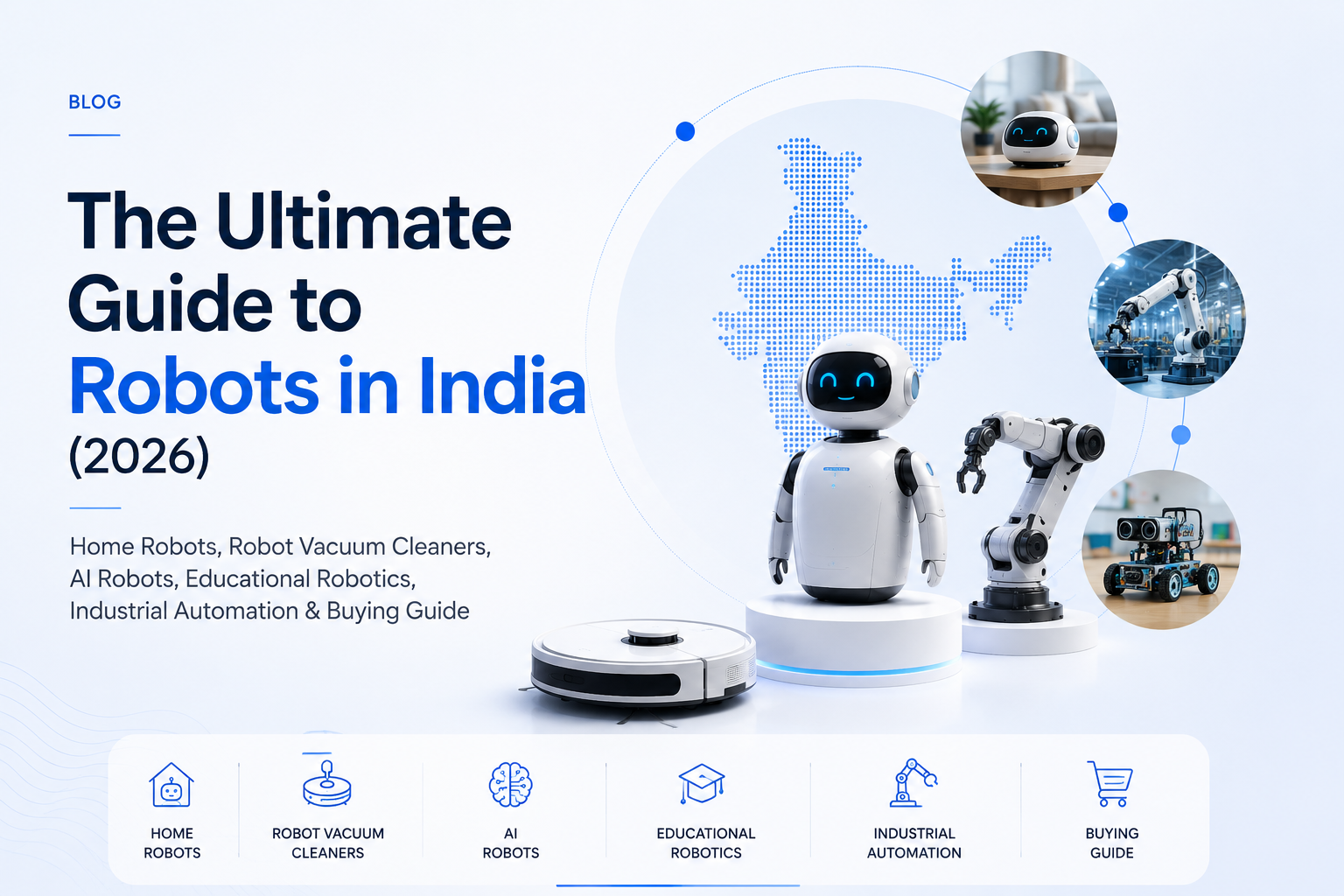
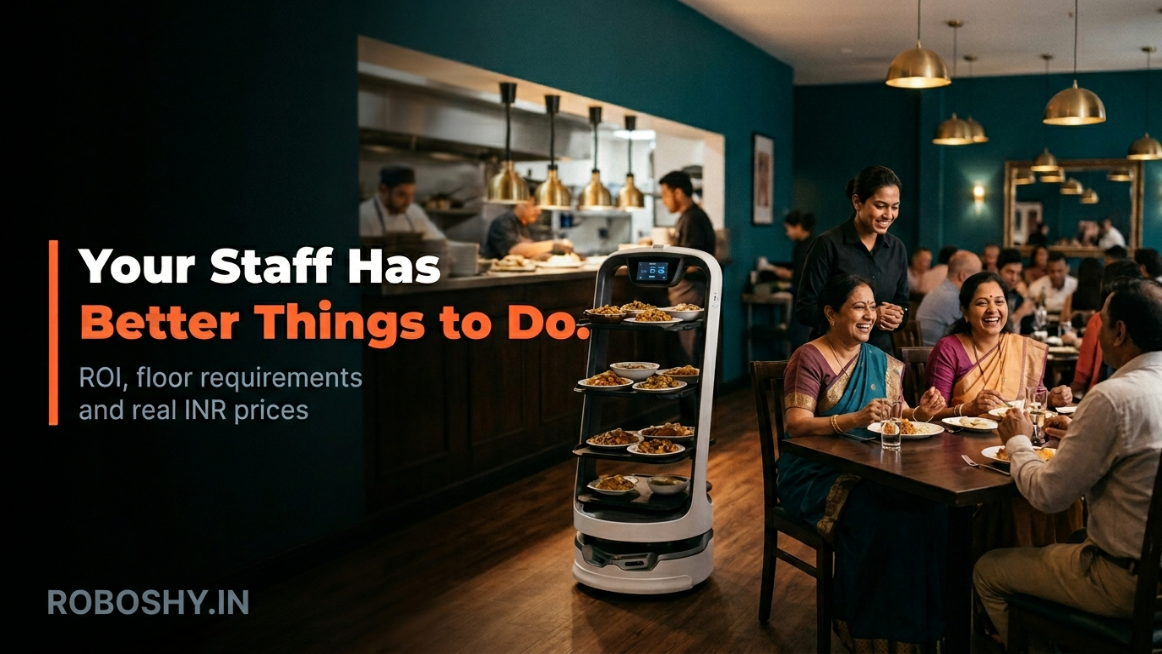
Food Serving Robot for Indian Restaurants: The Complete Guide
May 18, 2026
5:25 am

Agricultural Drones in India: Subsidies, Prices and Buyer Guide
May 7, 2026
5:18 am
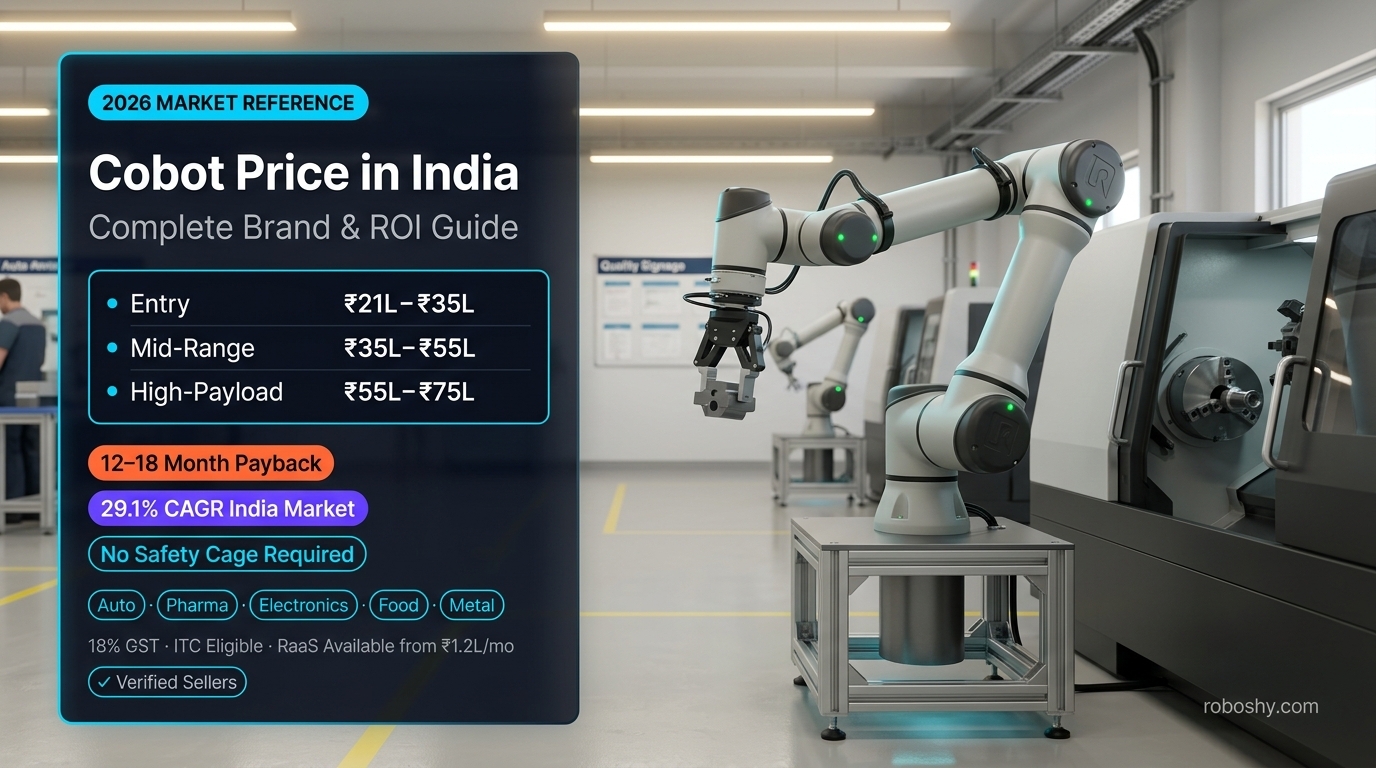
Cobot Price in India: What Indian Businesses Actually Pay in 2026
April 23, 2026
5:30 am
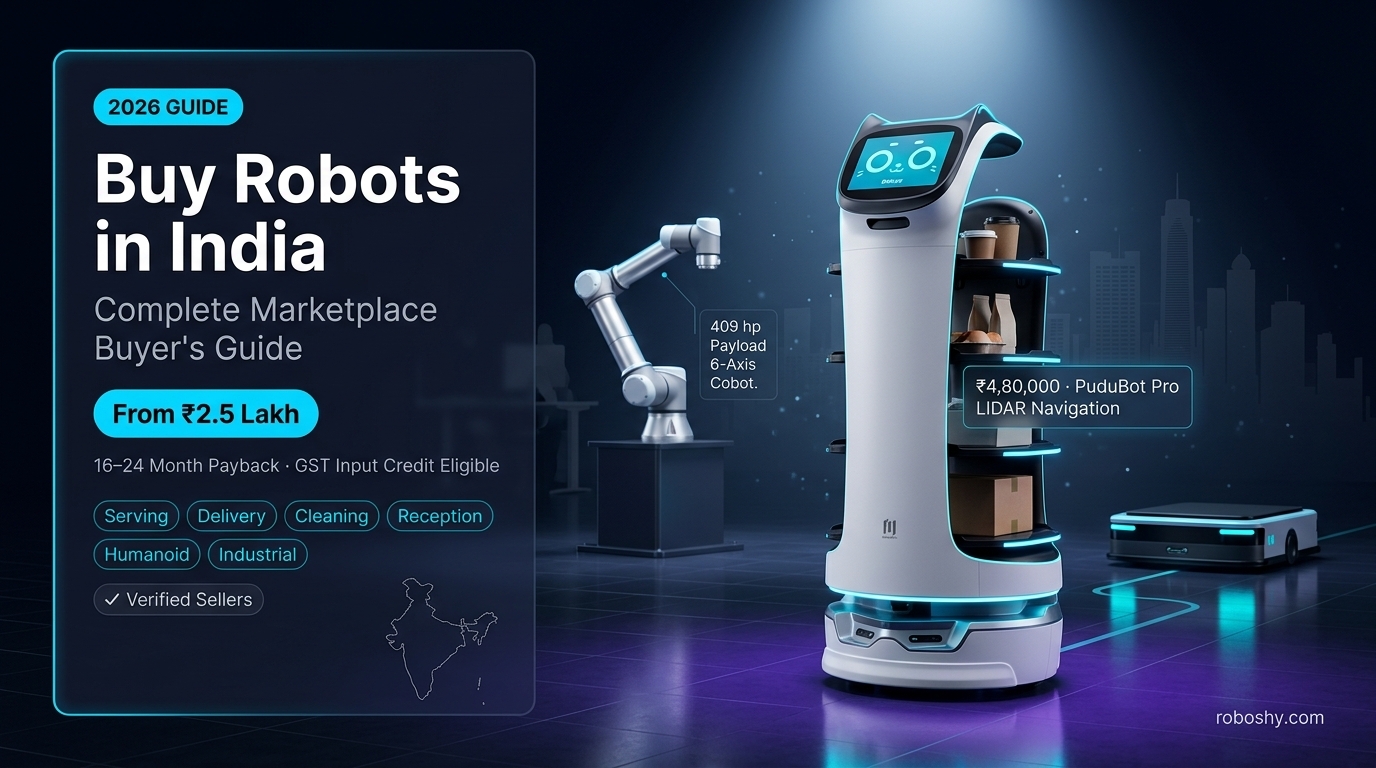
Buy Robots in India: The Complete Marketplace Buyer’s Guide
April 2, 2026
10:30 am
How Security Robotics Drive Business Impact and Operational Efficiency
March 13, 2026
9:52 am
Humanoid Robots Launching in 2026: What Buyers Need to Know Before They Purchase
February 28, 2026
10:34 am
Robotics-as-a-Service in India: Costs, Use Cases, and When Businesses Should Rent Robots
August 12, 2026
6:45 am
From Automation to Physical AI: How Robots Will Transform Indian Businesses
August 8, 2026
1:38 pm
Food Serving Robot for Indian Restaurants: The Complete Guide
May 18, 2026
5:25 am
Agricultural Drones in India: Subsidies, Prices and Buyer Guide
May 7, 2026
5:18 am
Cobot Price in India: What Indian Businesses Actually Pay in 2026
April 23, 2026
5:30 am
Buy Robots in India: The Complete Marketplace Buyer’s Guide
April 2, 2026
10:30 am
How Security Robotics Drive Business Impact and Operational Efficiency
March 13, 2026
9:52 am
Humanoid Robots Launching in 2026: What Buyers Need to Know Before They Purchase
February 28, 2026
10:34 am